Between Presence and Absence
Between Presence and Absence seems to draw upon the distances between scientific concepts, inviting us to understand art, beyond the perspective of complex systems, as a mechanism through which relationships are generated.
This suggests an open and continuously evolving system—one in which a temporary equilibrium emerges through the interactions among different subjects, media, experiences, and temporalities.
Art does not reproduce the world; rather, it reorganizes ways of seeing within a reality that is constantly changing. The viewer, too, becomes part of this process.
When our attention shifts away from the object itself toward how connections are formed between objects, art is no longer about the completion of form, but about how meaning continues to emerge through the act of looking.
As the world continues to undergo new transformations, what art offers may not be definitive answers, but instead the capacity to understand anew—to perceive the world differently, and to sense it anew.
Q: The Xi’an exhibition is titled Between Presence and Absence. How do you understand this title? And how does your work respond to it?
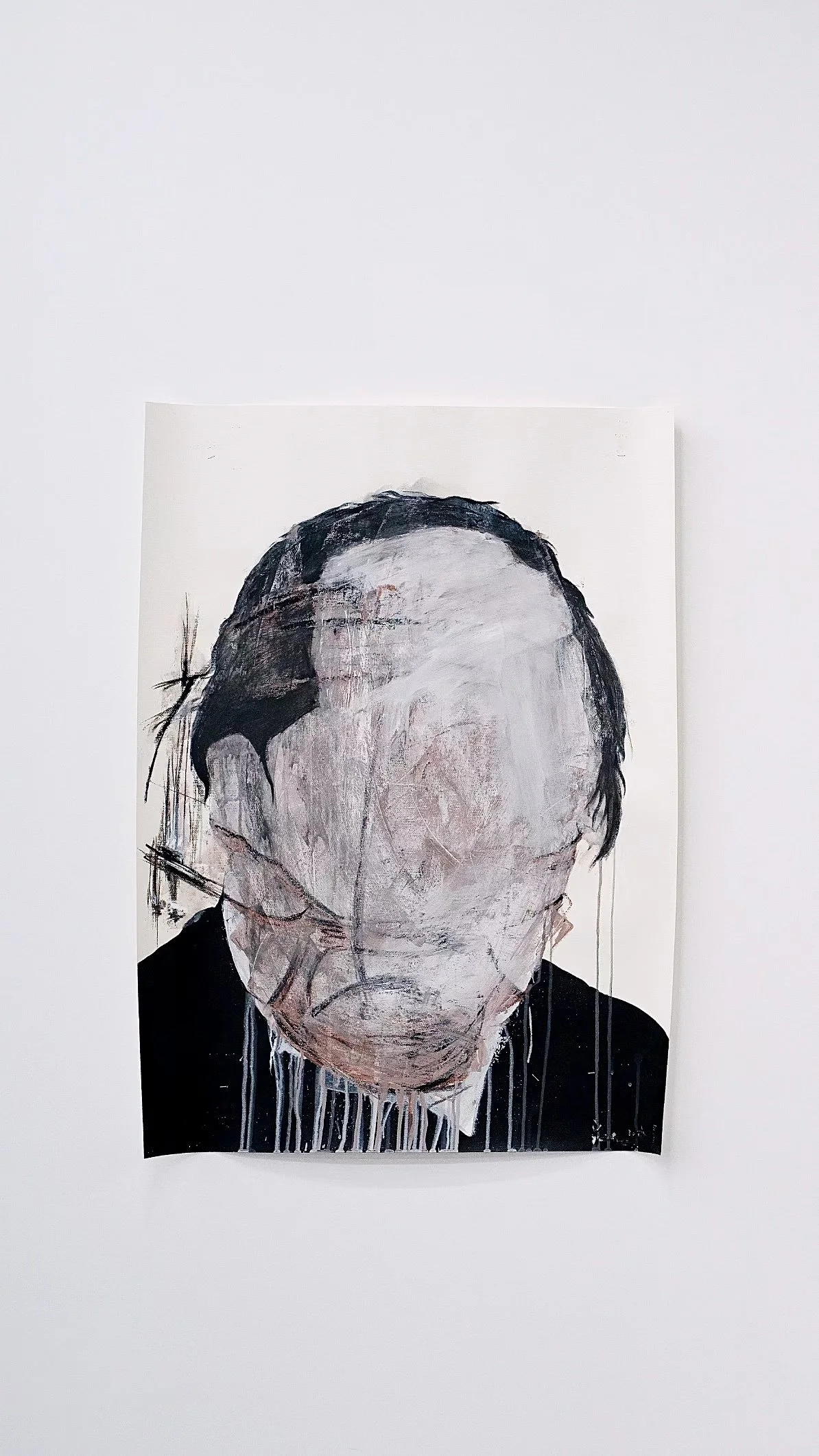
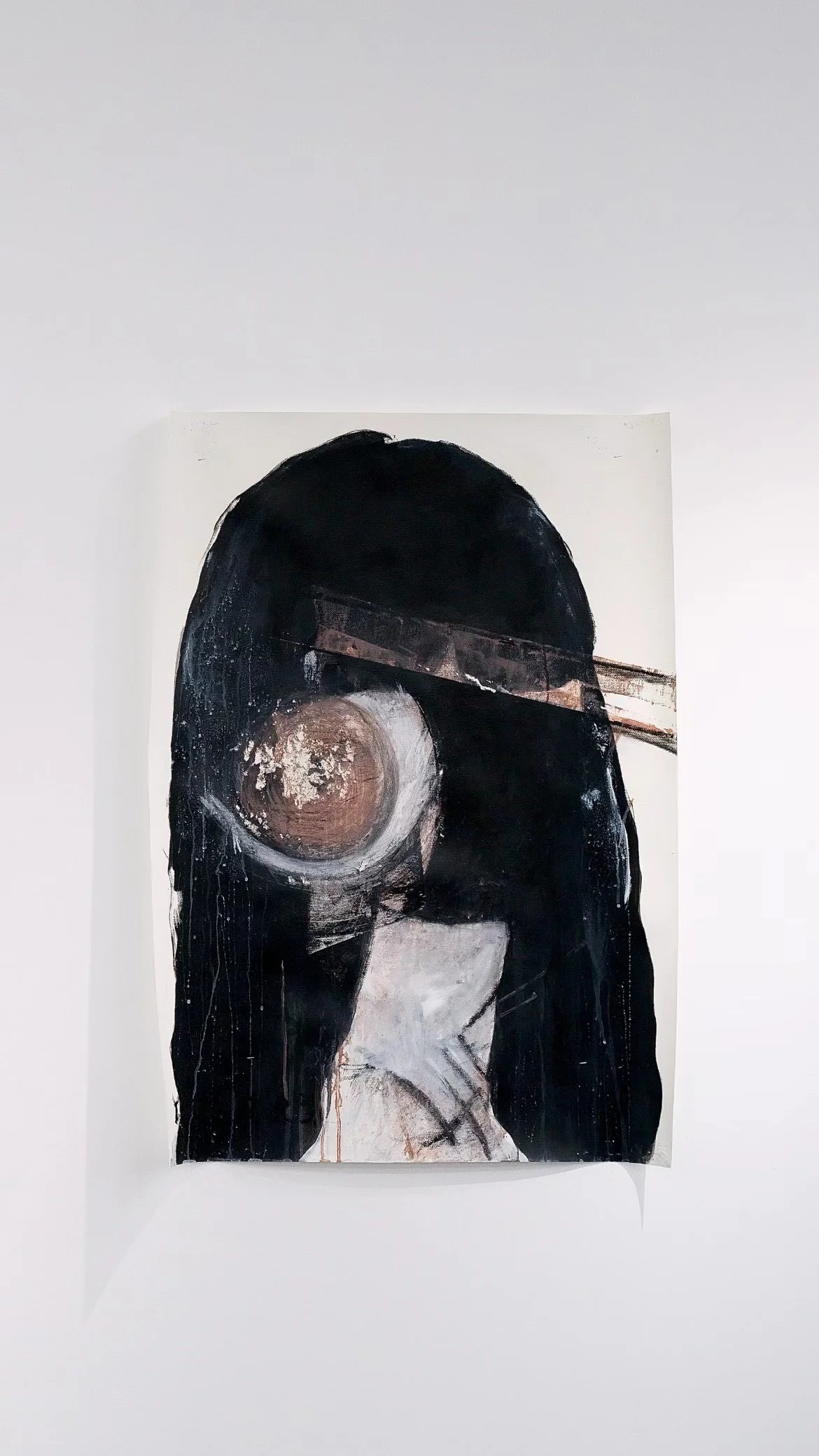
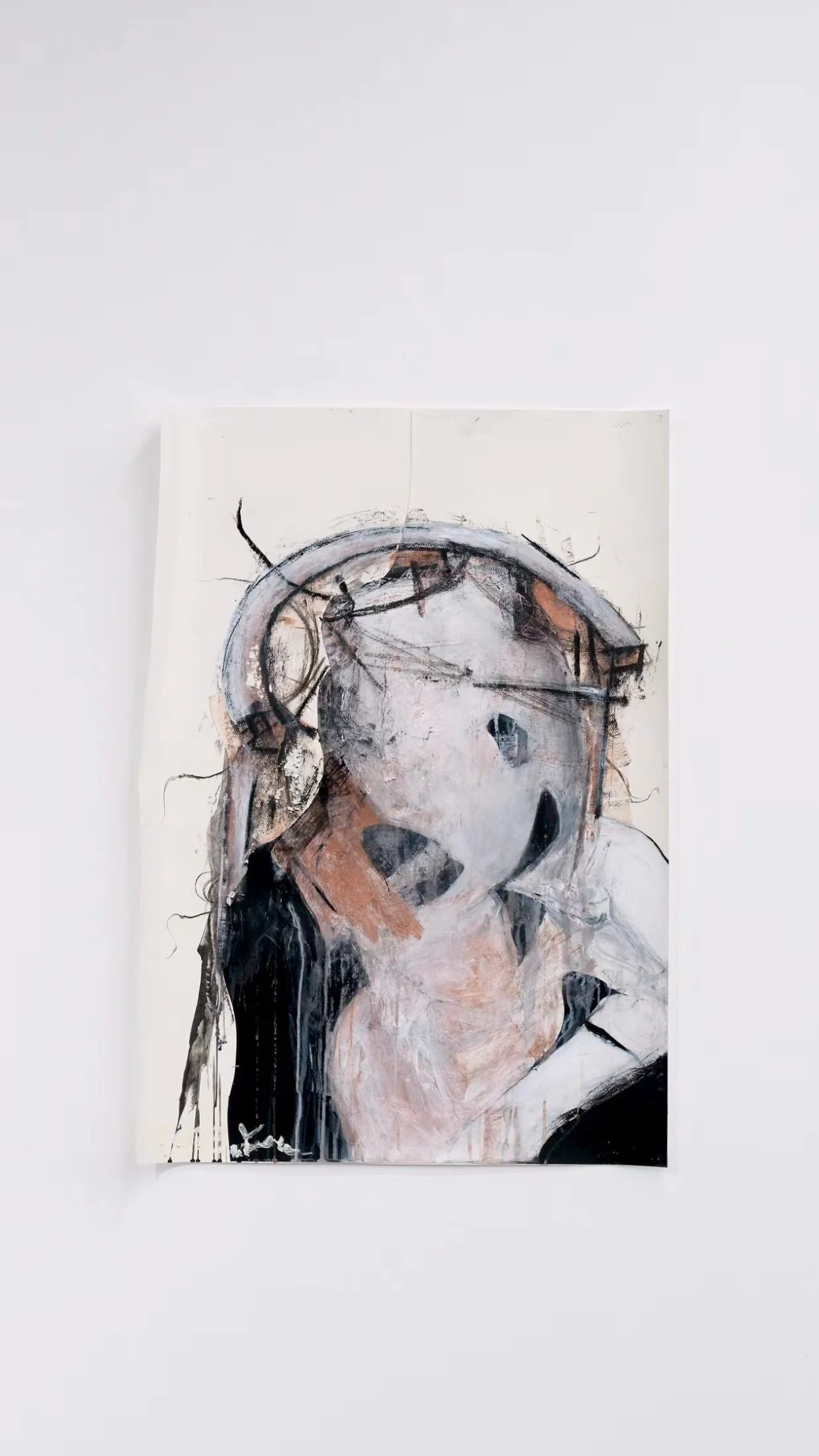
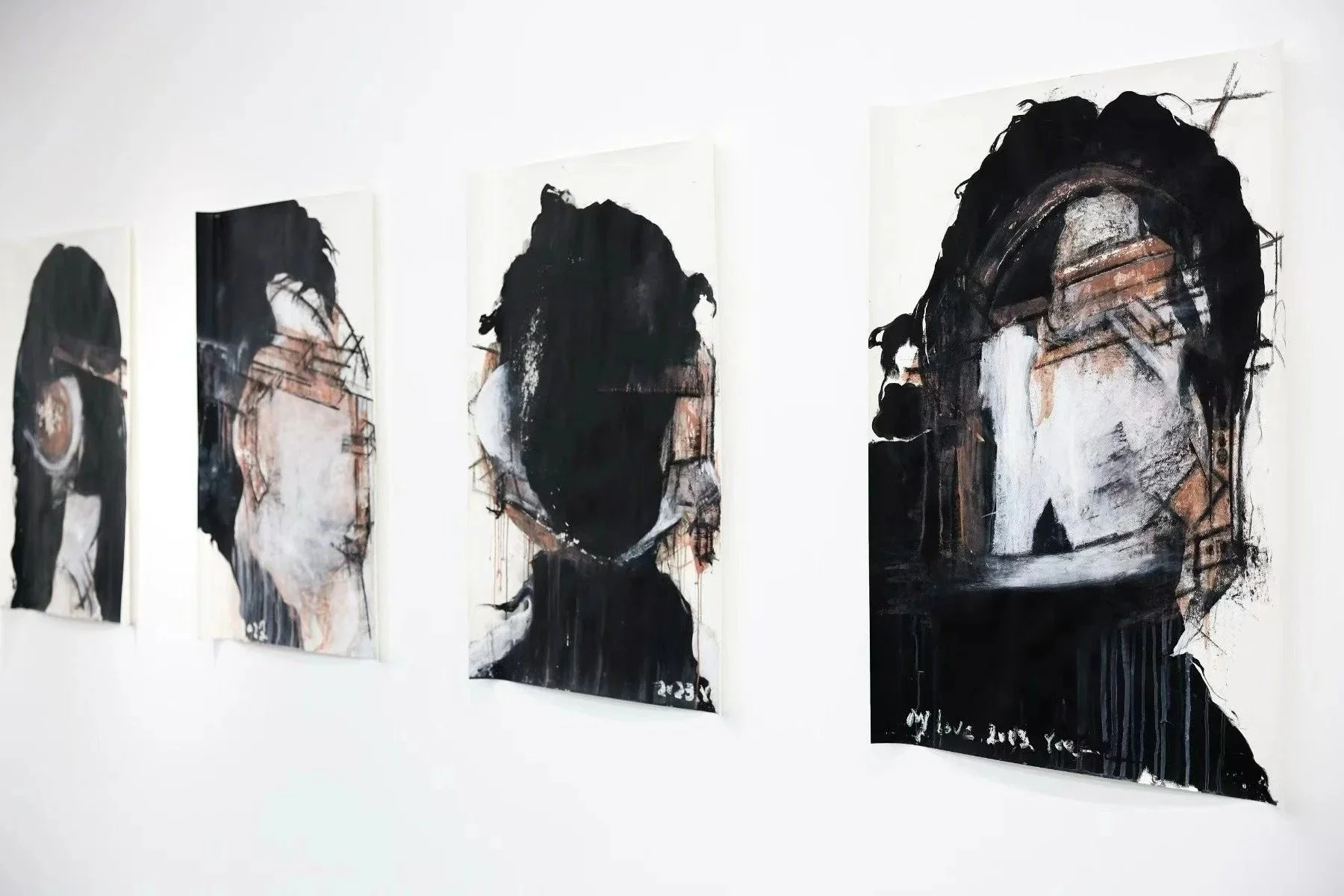
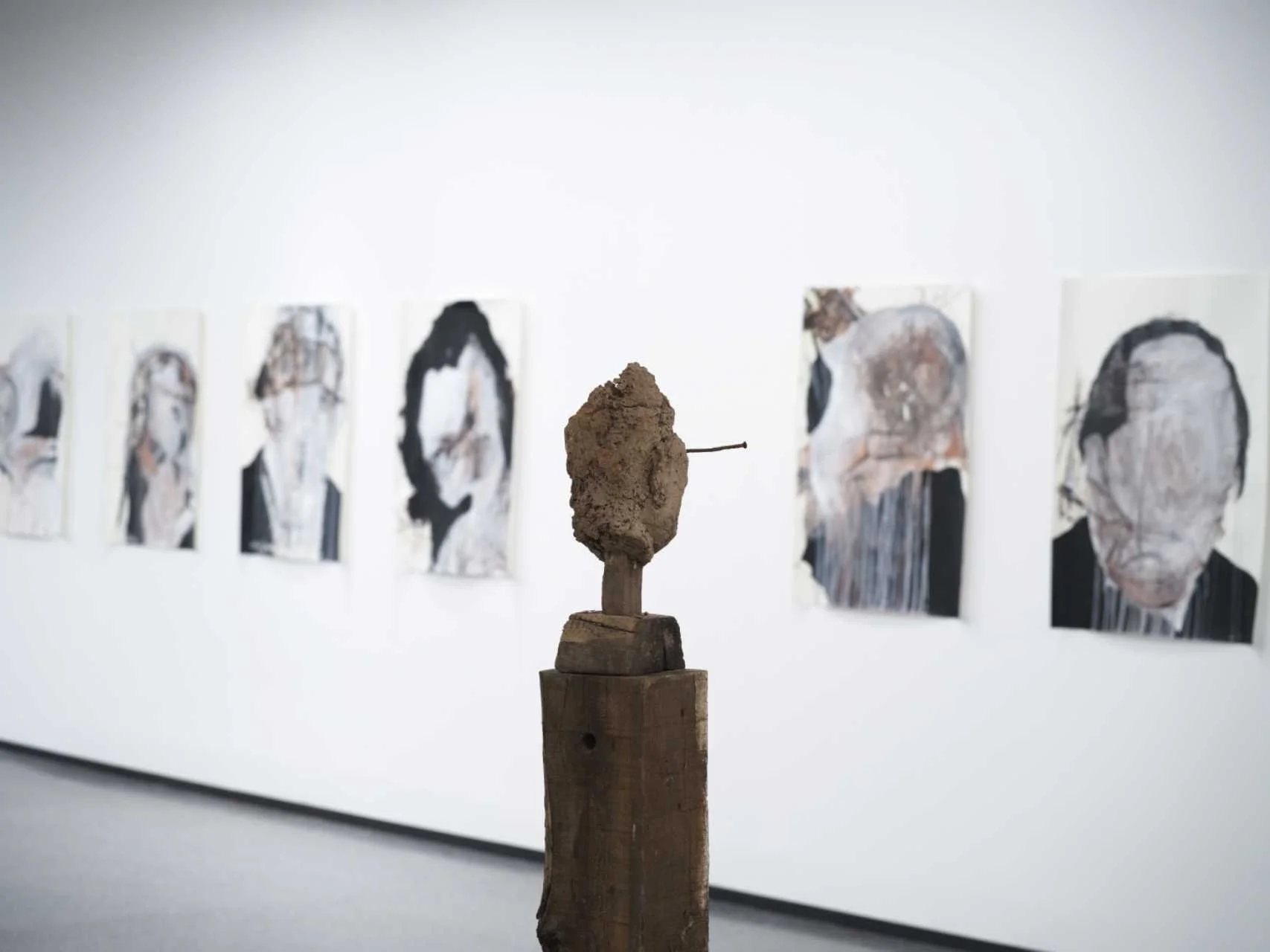
A: “Presence” and “absence” are not necessarily two opposing states. Very often, something only becomes clearer in another form after it has begun to disappear. The body may leave, while memory becomes more tangible; a person may no longer appear, yet the gestures, voice, breath they left behind, as well as the way we once looked at them, can continue to exist. Absence does not necessarily mean complete disappearance. It may be another form of presence. This is also where my work has gradually shifted in recent years. My Qinling series began more from mountains, landscapes, ruins, and materials. I was never really interested in depicting the mountain as a landscape. Instead, I was more concerned with how time acts upon a material object: covering, erosion, sedimentation, damage, and the traces ultimately left behind by these processes. The new works presented in this exhibition turn this way of looking toward the human body. The figures in these works are not based on any particular person from reality, nor am I interested in constructing a portrait in the traditional sense. For me, there is a profound connection between the human body and mountains, ruins, and remnants. They all exist within time, and they all continually undergo processes of becoming, transformation, and disappearance. So what these works are really concerned with is not “Who is this person?” but rather: What is a body when a specific identity has been removed? How is a life looked at? And how does a presence that has disappeared—or is in the process of disappearing—continue to remain within our consciousness? Therefore, Between Presence and Absence is not, for me, an exhibition about disappearance. It is an exhibition about the ways in which existence leaves traces.
Q: How many works are you presenting in this exhibition? Do they reflect your current artistic practice and ideas at this stage?
A: The works I am presenting this time are primarily recent paintings and sculptures of the human figure, while maintaining an underlying connection with my earlier practice. I feel that these works accurately reflect the environment I have been living in over the past few years, as well as what I have experienced during this period. But they are by no means a completed answer. On the surface, there seems to be a significant shift from Qinling to the figure works I am making now: one is about mountains, the other about people; one is oriented toward landscape and terrain, while the other engages with the body. But for me, they have always revolved around the same question: how does time act upon existence, and in what form does existence ultimately leave its traces? I have never defined my practice through a particular subject matter. Qinling is not a style for me, and “the figure” should not become my next style either. Subject matter is simply an entry point into a question at different stages of the work. In this sense, these works are more like a turning point. My attention is gradually shifting from the traces and remnants of the external world toward the body, consciousness, and lived experience itself.
Q: In the age of AI, how do you understand the relationship between art and technology? Would you consider using AI in your practice?
A: I am not opposed to AI. Throughout history, every new technology has changed the way images are produced. Photography transformed painting; cinema transformed the way we look; digital technology has also changed our understanding of images, time, and reality. AI will undoubtedly continue to transform art. But I think we need to distinguish between two things: the capacity to produce images and the emergence of art are not the same thing. AI can generate a highly complex, even beautiful image very quickly. But the truly difficult part of art has never simply been the production of an image. It is about why a person needs to make this particular work in the first place. For me, making art is connected to bodily experience, time, memory, and forms of lived experience that cannot be replaced by anything else. These things still constitute the foundation of my practice. If one day AI becomes an indispensable part of the logic of a work, I would use it. But I would not incorporate AI into a work simply because it has become a defining technological trend of our time. The medium should emerge from the question; the question should not follow the medium.
Q: How do you understand the relationship between form, content, and concept in art? Which one is more important?
A: I am not particularly inclined to separate form, content, and concept completely. In a work that truly holds together, form itself is a way in which thought takes place.
If a concept can be entirely separated from the work and clearly expressed through a piece of writing, then sometimes art may not be necessary. Conversely, if a work is only visually beautiful in terms of form, without giving rise to a deeper question, it can easily become a form of visual consumption. What matters more to me is the point at which the two become inseparable. For example, in my figure works, the blurring, covering, fragmentation, and uncertain boundaries of the body are not intended to establish a particular painting style. They emerge because the very nature of the “existence” I am confronting is unstable. Ultimately, form should become part of the question itself.
Q: How do you view the role of contemporary art in engaging with society and expressing the spiritual dimension of human experience?
A: I don't think these are mutually exclusive positions. Art can certainly engage directly with society, politics, and current events, and many important works since the twentieth century have emerged from precisely this kind of engagement. At the same time, I believe that thinking about life, death, the body, memory, and existence does not mean withdrawing from reality. We live in an extremely accelerated era. Information is constantly updated, images are continuously generated, and people are increasingly reduced to data and labels. In a sense, we possess an unprecedented capacity for “presence”: everyone can appear, be seen, and be recorded at any moment. And yet, at the same time, genuine bodily experience, human relationships, and even death itself are becoming increasingly easy to obscure. In this sense, questioning the spiritual dimension and the nature of existence can itself constitute a response to reality. At this stage, my work tends to approach these questions through individual and bodily experience, rather than directly commenting on a particular social event. I hope to keep the work open, so that viewers can bring their own experiences into it.
Q: Could you elaborate on one of the works presented in this exhibition?
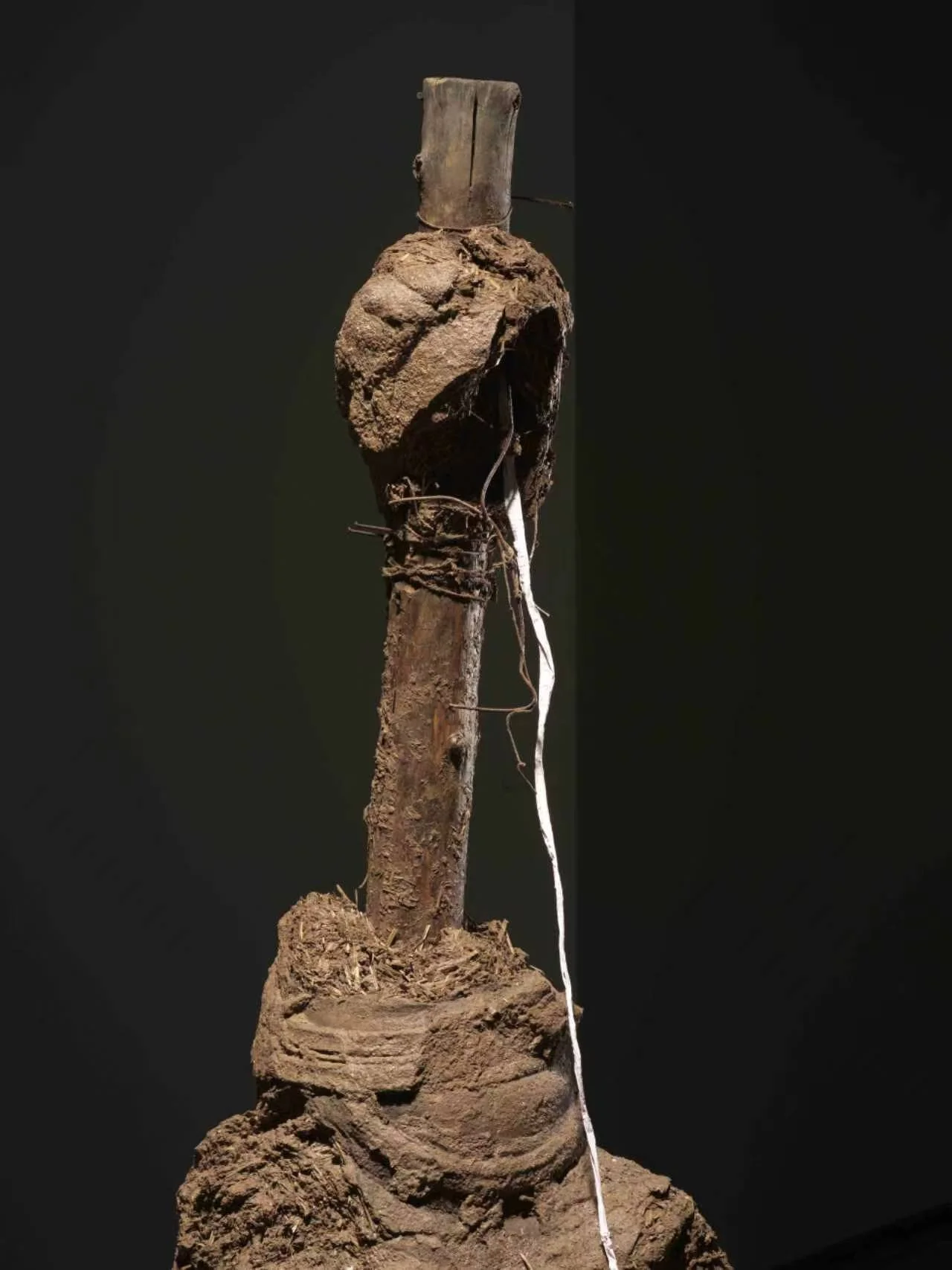
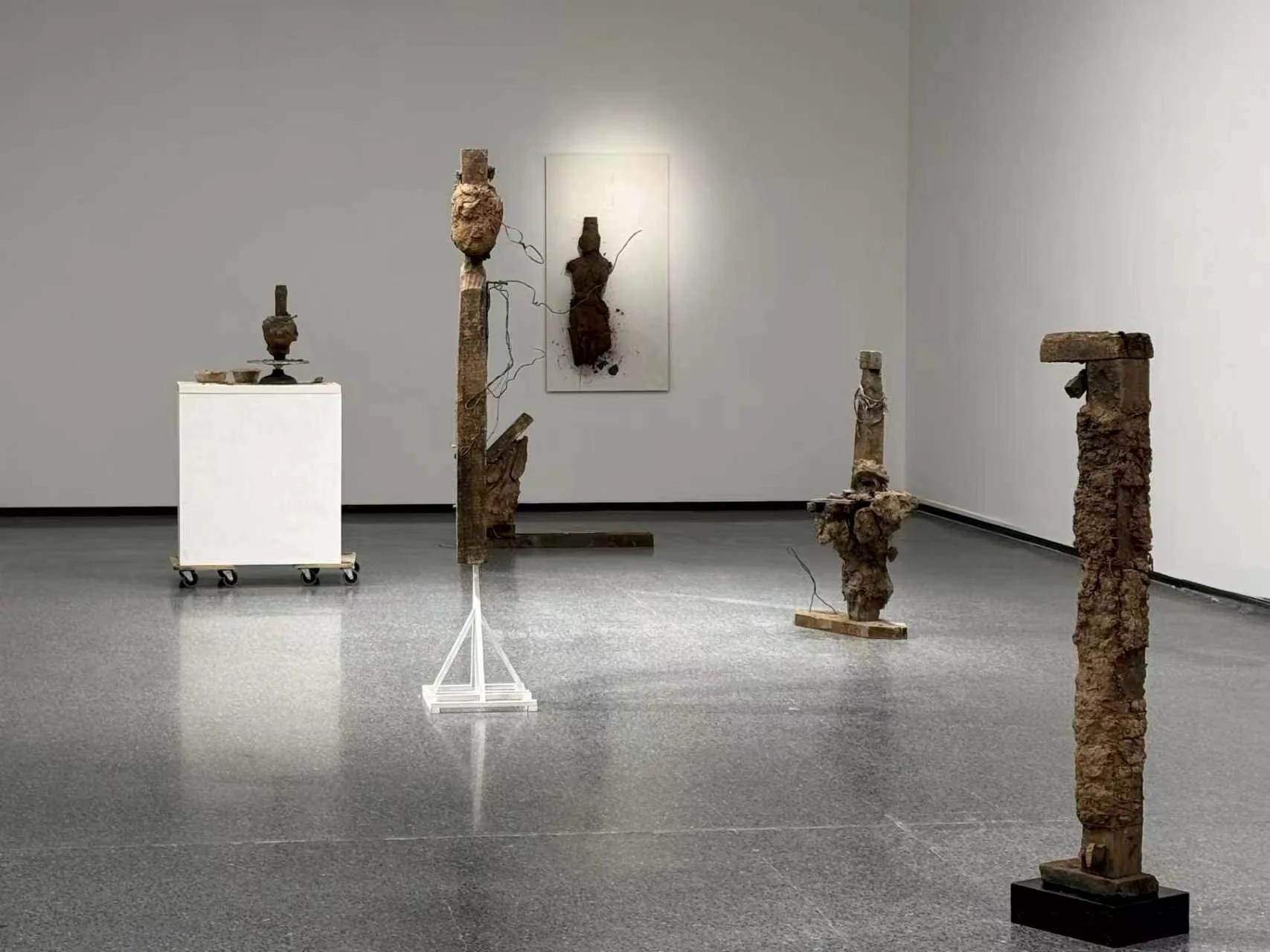
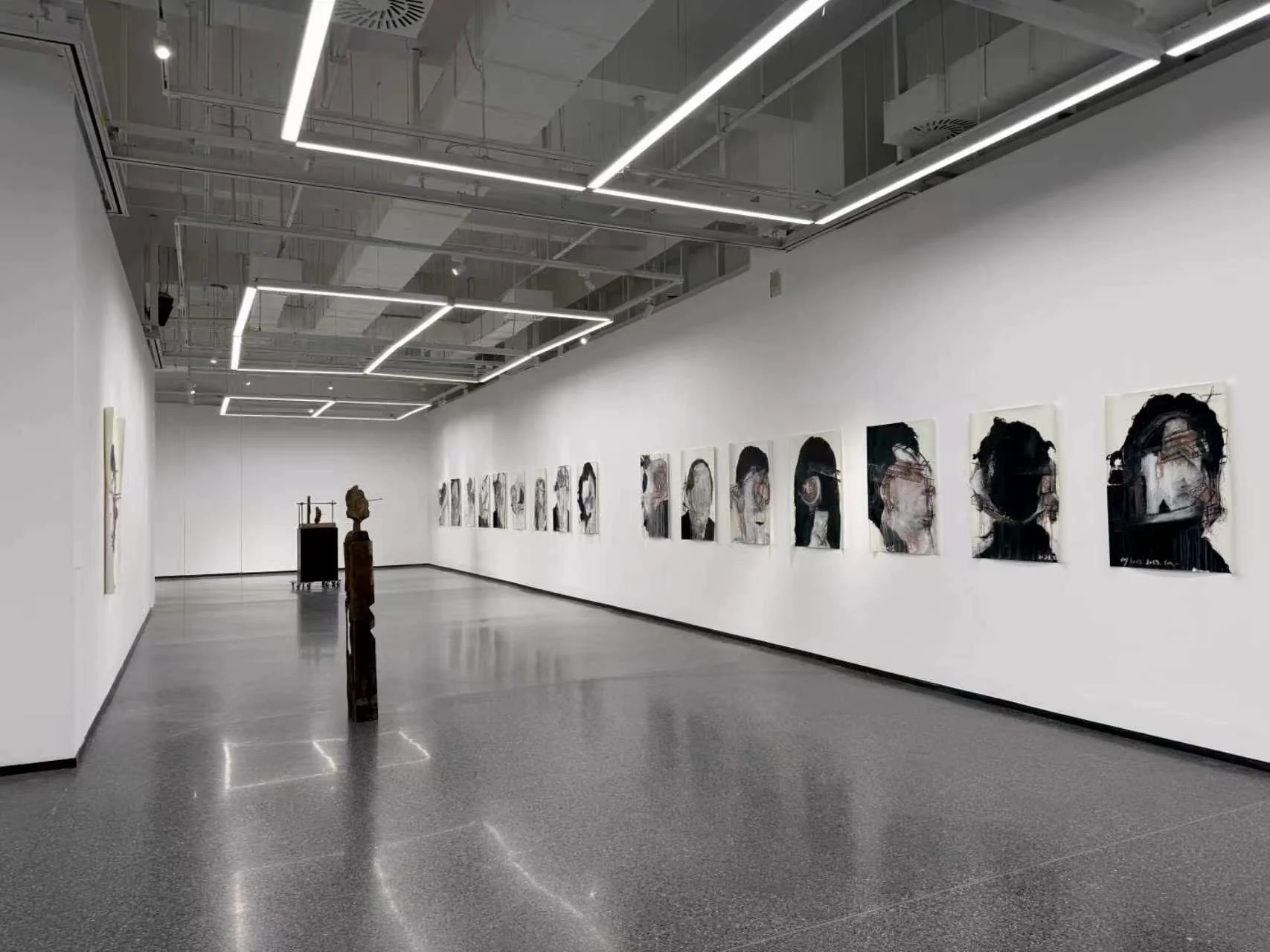
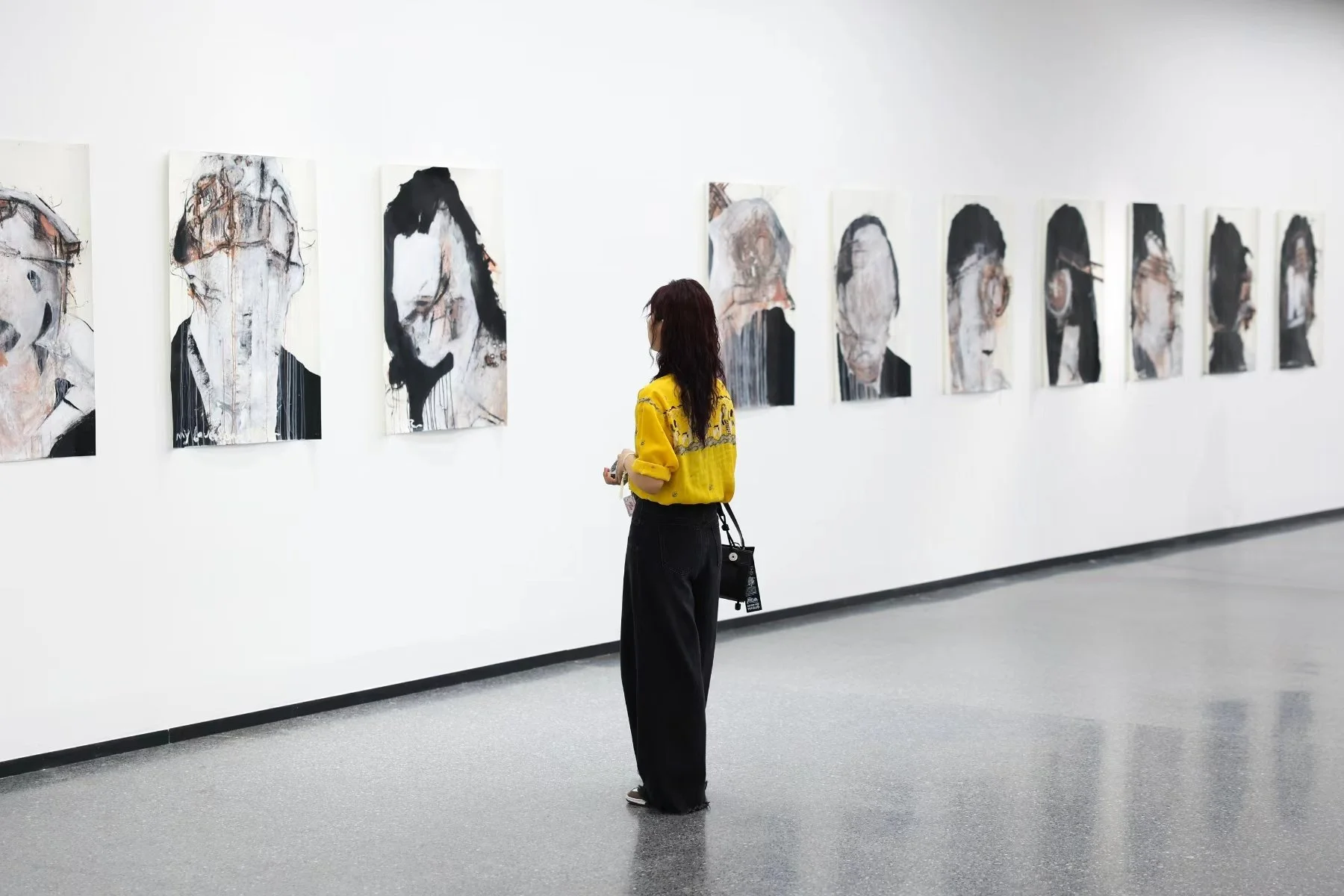
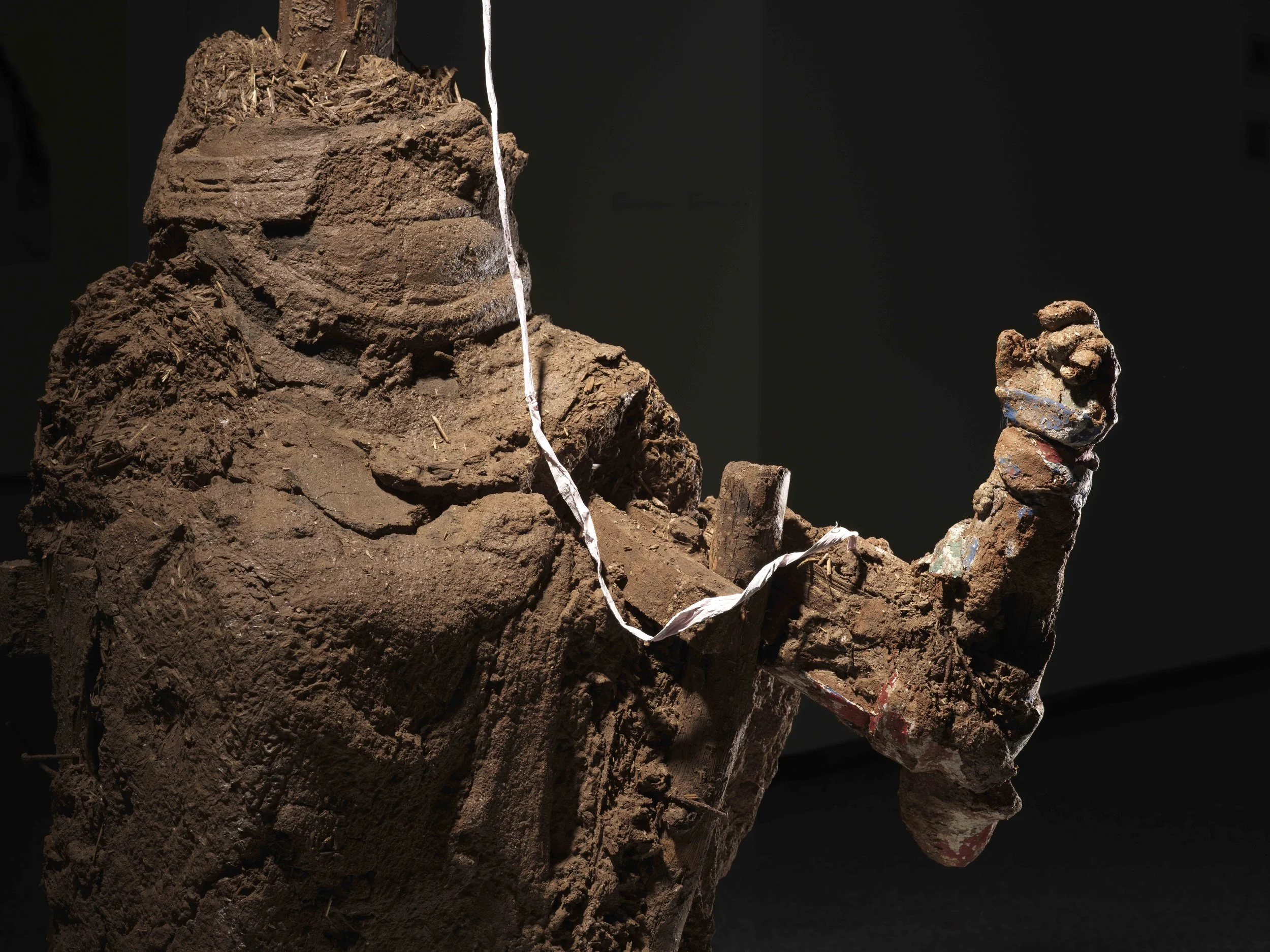
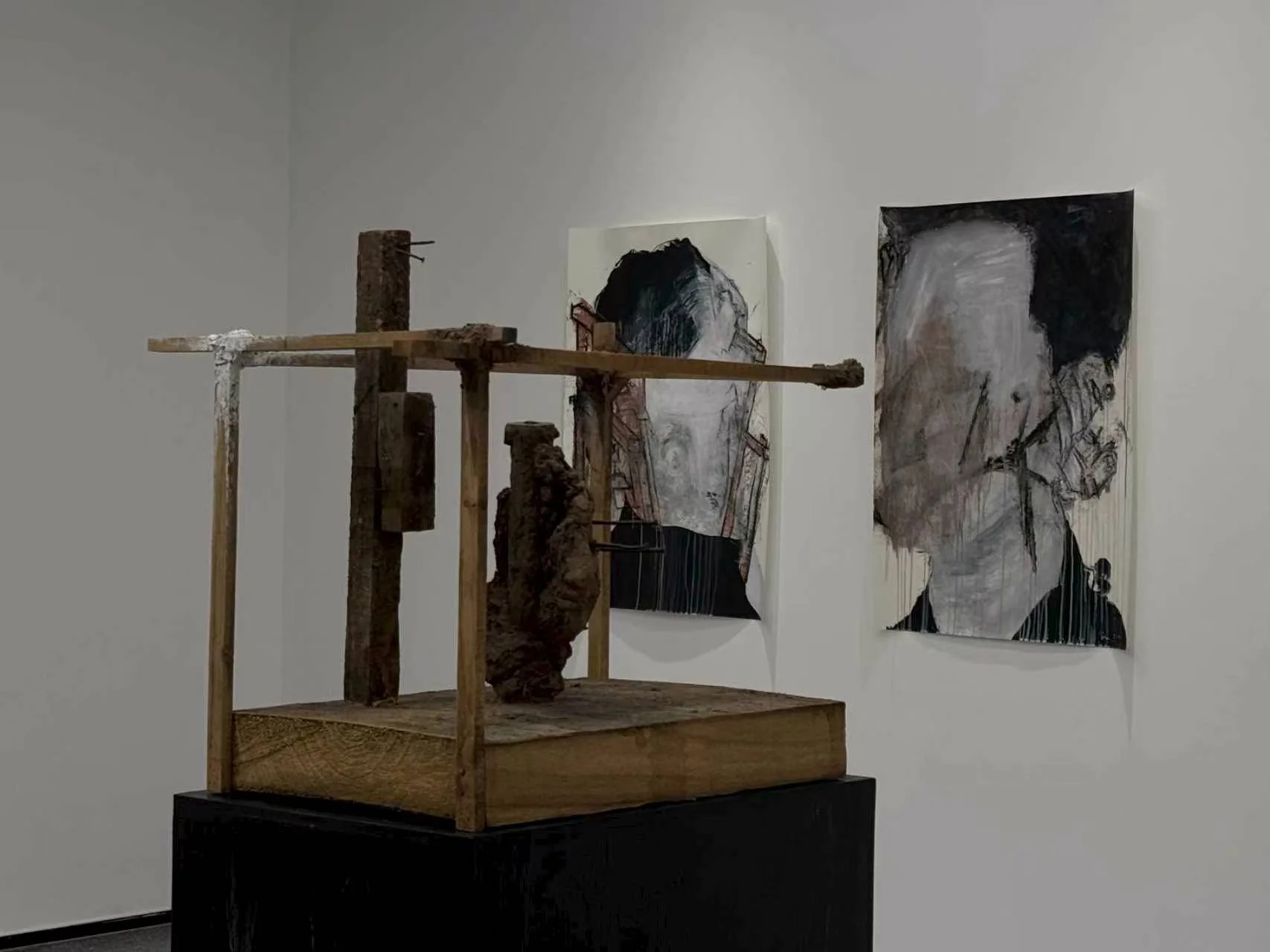
A: I would like to begin with the figure paintings in this exhibition. On the surface, these works still retain the basic structure of a portrait: the head, shoulders, hair, and traces resembling certain facial features remain. But the figures have no clearly defined identities, nor are they based on identifiable people from reality. I deliberately remove, layer by layer, the information that would allow their identities to be confirmed. Once names, faces, professions, relationships, and specific identities have been removed, the question that truly interests me begins to emerge: If all the information that allows us to recognize a person gradually ceases to function, can a life still be perceived? These works originated in a very particular experience of looking. During the final stage of my father’s life, he repeatedly described to me certain people whom no one in the physical world could identify or verify. I painted them according to his descriptions, and he would then identify, correct, and confirm the images. Through this process, the structure of the portrait changed. It was no longer the conventional relationship of: “subject — artist — image” but became another chain: “the unseen — the witness — the executor — the image.” I had never actually seen these people. The only person who could confirm them was my father. The authenticity of the work, therefore, no longer came from the subject itself, but from the act of witnessing. And when the only witness disappeared, the final guarantee connecting the image to reality disappeared with him. The series could not continue—not simply because I had lost a family member, but because the relational structure that had originally allowed these images to come into being no longer existed. What disappeared was not only a person, but the very condition through which a world could be confirmed. It is from this point that sculpture began to emerge. I do not understand sculpture simply as an extension of the medium. Rather, it feels like an inevitable consequence of the questions within the paintings entering physical space. The lines in the paintings become wire; the frames become wooden beams; the damaged faces become bodies in space that are themselves losing their integrity. Wood bears weight. Earth forms the body. Wire connects one element to another. Nails prevent the structure from coming completely apart. The original question of “witnessing” gradually transforms into another: When the structures that support us begin to fail, can the body still hold together?
I deliberately leave these supporting structures exposed. Because the body in reality has never been a completely independent existence. It depends upon bones, organs, air, and food. A person’s identity likewise depends upon a name, language, memory, relationships, and the recognition of others. What we call a complete person may, in fact, be nothing more than the temporary result of countless relationships holding together. That is why these sculptures always seem to carry a sense of instability. They appear as though they might tilt, break, or collapse at any moment, yet they never actually fall. For me, this “not falling” is extremely important. Because once they truly collapse, they acquire a definite outcome—destruction. I would rather leave the work suspended before that outcome occurs: between standing and falling, between wholeness and fragmentation, between connection and rupture. That is why these works are not ruins. A ruin implies that something has already happened. These works, by contrast, present something that is still happening. I want to leave the work in this state of tension, at the threshold.
Q: How do you view the current state and future of contemporary Chinese art? What are your goals for your future practice?
A: This is actually a question on which I would rather not make an overly broad judgment. “Contemporary Chinese art” has already become an extremely complex concept. There are significant differences in ways of working across regions, generations, and media, making it increasingly difficult to describe the field through a single, unified narrative. Rather than trying to predict its “future,” I am more concerned with whether artists can continue to develop questions that are genuinely their own. Today, images are increasingly easy to produce, information travels ever more rapidly, and styles are becoming increasingly easy to identify and reproduce. In such an environment, I think the truly difficult task for an artist is not to produce more works, but to determine: What is a question worth spending ten years—or even longer—working on? As for myself, I have no interest in constantly searching for new subject matter. From Qinling to the body, portraiture, and sculpture that I am working with now, I have become increasingly aware that what truly concerns me has never been the mountain or the figure itself, but a more fundamental question: How does an existence come into being, and how does it change, deteriorate, and disappear through time? Painting, sculpture, and other media may all change, but I do not want the medium to become the purpose of the work. I would rather have the work continually move closer to the question itself. For me, art is not about providing answers. It is more like returning to a place we have taken for granted, and creating a question there once again.
Yao
August 29, 2026
Nishinomiya, Hyogo Prefecture, Japan
Kurakuen
Artist Interview — Form, Content, Witnessing, and Existence